


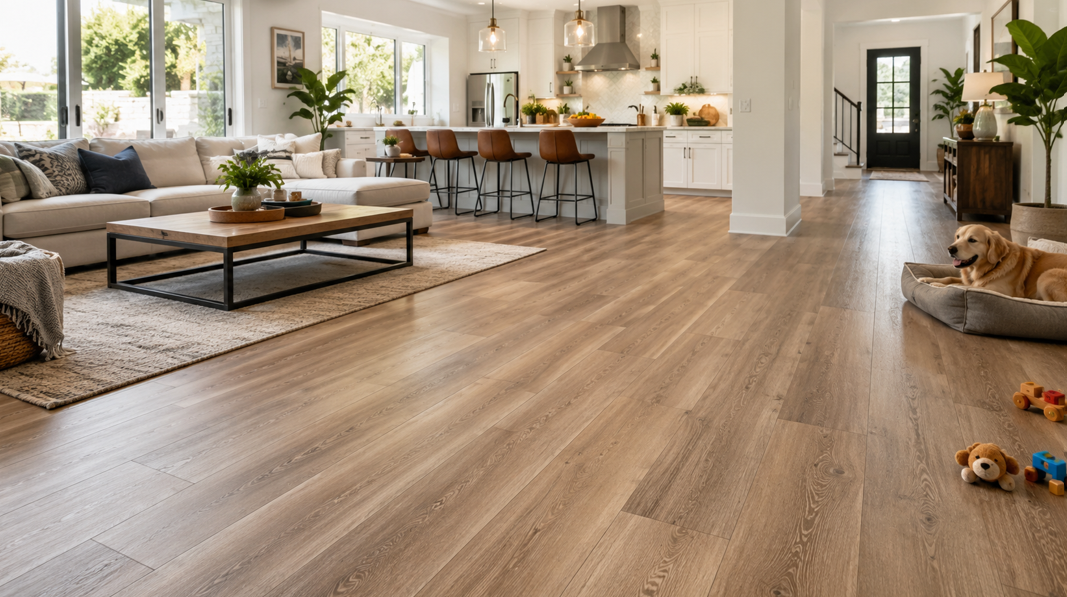
A beautiful floor needs to do more than look good on installation day. In a busy household, it also needs to cope with shoes, children, pets, furniture, dropped objects, everyday spills and the constant movement that comes with normal family life.
That is where laminate flooring can be particularly useful.
Modern laminate has moved well beyond the basic flooring many homeowners may remember from years ago. Today's better-quality products can offer realistic wood-inspired designs, textured surfaces, durable wear layers and practical resistance to the everyday demands of active homes.
For Irvine homeowners balancing contemporary design with a busy lifestyle, laminate can offer an appealing combination of appearance, durability and value. It can work particularly well in family rooms, hallways, home offices, bedrooms and other areas where flooring needs to look polished without demanding constant attention.
At Sharon and Sons, our family has spent more than 40 years helping Orange County homeowners choose flooring that suits both the way they want their homes to look and the way they actually live in them. When selecting laminate for a high-traffic space, the goal is not simply to find the toughest product available. It is to choose a floor whose construction, finish, appearance and performance make sense for the specific household.
What Makes an Area "High Traffic"?
Some areas of a home naturally experience more wear than others.
Entryways see outdoor shoes, grit and repeated footfall. Hallways act as daily pathways between rooms. Kitchens and family rooms often become gathering spaces where people move chairs, carry food, play with children or entertain guests.
Homes with open-plan layouts can place even greater demands on flooring because the same surface may run continuously through several heavily used spaces.
High traffic can also mean different things in different households.
A retired couple may place relatively little stress on a hallway that a family with three children and two dogs uses dozens of times each day. Someone who works from home may create concentrated wear around a desk chair. A home where guests frequently move between indoor and outdoor entertaining spaces may introduce more dust and debris.
The first step in choosing durable flooring is therefore understanding the actual traffic patterns of the home.
Why Laminate Works Well in Busy Spaces
Laminate flooring is constructed in layers, with each layer contributing to its performance.
While exact construction varies by manufacturer and product, laminate typically includes a stabilising base, a dense core, a decorative design layer and a transparent wear layer on top.
That upper wear layer is particularly important in high-traffic rooms.
It helps protect the visual surface from everyday abrasion and wear. Depending on the specific product, laminate may also offer useful resistance to scratching, staining and fading.
This layered construction allows manufacturers to produce flooring that recreates the appearance of natural wood while providing practical characteristics suited to active households.
For homeowners who love the look of oak, walnut or other wood styles but want a floor designed around straightforward maintenance and everyday durability, laminate deserves serious consideration.
Understanding Laminate Durability Ratings
When comparing laminate products, you may encounter an AC rating, which refers to abrasion class.
The rating is intended to indicate how well a laminate floor can withstand different levels of wear.
In simplified terms, lower ratings are intended for lighter residential use, while higher ratings are designed for increasingly demanding environments.
For a busy residential home, products commonly associated with moderate-to-heavy residential use may be worth considering. However, a higher rating should not automatically be treated as the only sign of quality.
A durable floor also needs suitable construction, good installation and appropriate care.
Think of an abrasion rating as one part of the decision rather than a complete answer.
If two products have similar ratings but one has a construction, texture and warranty better suited to your household, that product may ultimately be the better fit.
Scratch Resistance Matters in Active Homes
One of the most common concerns homeowners have about flooring is scratching.
No floor is completely scratch-proof, but laminate can be a practical choice when surface durability is important.
Its protective wear layer helps the floor tolerate many ordinary sources of abrasion. That can be useful in homes with pets, children's toys, frequent visitors or furniture that is moved regularly.
Still, sensible prevention matters.
Furniture pads should be placed beneath chair and table legs. Heavy items should be lifted rather than dragged. Entry mats can help capture grit before it travels across the floor.
This last point is especially important because tiny particles of dirt and sand can act like abrasive material under footwear.
Durability should never be interpreted as permission to neglect a floor. Instead, choose a product designed for active use and support that performance with simple maintenance habits.
Consider Pets When Choosing Laminate
Pets can place very different demands on flooring than people do.
Dogs may run through hallways, turn quickly around corners or bring outdoor debris inside. Food and water bowls can create occasional spills. Pet hair can also make flooring maintenance a regular part of the week.
Laminate can be attractive for pet-friendly households because many products offer a hard surface that is relatively easy to clean.
When comparing options, consider surface texture as well as durability.
A floor that is extremely smooth may be less comfortable for some pets to walk on, particularly larger or older dogs. A lightly textured surface can help provide a more natural feel while also contributing to the realistic appearance of the floor.
Colour matters too.
Very dark floors may show light pet hair clearly, while extremely pale floors may make certain marks or debris more noticeable. Mid-tone woods, subtle grain movement and multi-tonal patterns can often be forgiving in active family spaces.
Don't Ignore Water Resistance
Durability is about more than scratching and wear.
Everyday spills are part of life, especially in kitchens, dining spaces, laundry-adjacent areas and homes with children or pets.
Traditional laminate was generally more vulnerable to moisture than many modern products. Today's market includes laminate options designed with improved water-resistant or waterproof performance.
The terminology used by manufacturers matters.
"Water-resistant" and "waterproof" do not necessarily mean the same thing, and performance can depend on installation, exposure time and the conditions covered by the manufacturer's warranty.
If moisture is likely to be a significant concern, ask specifically how the product is designed to perform and what care the manufacturer recommends.
A floor intended for a quiet bedroom does not face the same risks as flooring next to a busy kitchen island or back door.
Choose a Surface That Hides Everyday Wear
One of the easiest ways to make a high-traffic floor feel easier to live with is to select a design that does not highlight every footprint or speck of dust.
Very glossy flooring can show smudges, footprints and surface marks more readily than lower-sheen finishes.
For active homes, matte and low-sheen surfaces are often appealing because they create a softer appearance while disguising minor everyday evidence of use.
Texture can help too.
Embossed wood-look surfaces create visual depth and can make laminate feel more natural. Grain patterns, knots and subtle colour variation also prevent the surface from appearing too flat or uniform.
The practical benefit is that minor dust or small marks tend to blend into the pattern rather than becoming the first thing you notice when you walk into the room.
Mid-Tone Wood Looks Can Be Especially Practical
Colour has an important relationship with maintenance.
Very dark flooring can look dramatic and sophisticated, but it may reveal dust, crumbs and lighter pet hair quickly. Very pale floors can make certain stains or darker debris more obvious.
Mid-tone wood looks often provide a useful middle ground.
Warm natural oak tones, gentle greiges and softly varied brown finishes can complement the bright, contemporary interiors popular throughout Orange County while remaining relatively forgiving in busy rooms.
Natural-looking variation can be particularly effective.
Rather than every plank appearing identical, a floor with gentle changes in tone and grain creates movement across the room. This can make the overall space feel warmer while helping minor day-to-day marks attract less attention.
Compare Laminate Flooring in Person
Product images are useful for inspiration, but flooring should ideally be evaluated at full scale.
A small online photograph cannot always communicate texture, plank proportion, sheen or how colour changes under different lighting.
When comparing laminate flooring, consider bringing together the other materials already present in the room.
Cabinet samples, paint colours, countertop materials and furniture finishes can all change the way a flooring colour appears.
Natural light is especially important in Southern California homes.
A grey-toned plank that appears balanced under showroom lighting may feel cooler in one room and warmer in another. A natural oak finish may look considerably brighter when afternoon sunlight crosses the floor.
If possible, view samples from several directions and at different times of day.
Plank Size Changes the Look of the Room
Durability may be the priority, but proportions still matter.
Modern laminate is available in a range of plank widths and lengths designed to reproduce different hardwood looks.
Wider planks can make a room feel more open and contemporary, particularly in larger spaces or open-plan layouts. Narrower planks can create more visual movement and may suit smaller rooms or more traditional interiors.
Longer planks can also reduce the number of visible end joints, creating a cleaner overall effect.
The right format depends on the room.
Avoid choosing a wide-plank product solely because wide boards are fashionable. Consider how the plank dimensions relate to the size of the space, the cabinetry and the existing architecture.
A well-proportioned floor usually looks better for longer than one selected purely around a short-term trend.
Installation Is Part of Durability
Even excellent flooring can underperform if it is not installed correctly.
The surface beneath laminate needs to be properly prepared. Uneven areas, unsuitable moisture conditions or incorrect installation practices can affect how the finished floor feels and performs.
Transitions also require planning, particularly where laminate meets tile, carpet or another flooring material.
Expansion requirements are another important consideration. Flooring systems need to be installed according to the manufacturer's specifications so that the material has the space and support it requires.
Professional installation helps ensure that these less-visible details receive appropriate attention.
The goal is not simply to make the floor look finished on the first day. It is to create an installation designed to perform consistently through everyday use.
High-Traffic Areas That Can Benefit From Laminate
Laminate can work effectively in several parts of an active home.
Entryways
An entry is one of the first areas to experience dirt and foot traffic.
A durable, easy-to-clean laminate surface can make everyday upkeep simpler, provided the selected product is appropriate for the moisture exposure expected in that location.
Using an entrance mat can provide additional protection.
Hallways
Hallways concentrate traffic into a relatively narrow path.
Because everyone repeatedly walks through the same space, the floor needs to handle consistent wear while maintaining its appearance.
A patterned or textured wood look can work particularly well here.
Family Rooms
Family rooms are often among the hardest-working spaces in the house.
Children play, furniture moves and people gather for everyday activities. Laminate provides the opportunity to create a wood-inspired appearance without making the room feel too precious to use.
Home Offices
Home offices introduce a specific form of repeated wear, especially beneath rolling chairs.
Protective chair mats or appropriate furniture protection may still be advisable, but a durable laminate product can offer a practical foundation for the space.
Open-Plan Living Areas
When the same floor extends through several connected rooms, visual continuity can make the home feel larger and calmer.
Laminate can provide that consistent surface while accommodating the substantial amount of traffic these shared areas receive.
Laminate and Irvine's Modern Family Lifestyle
Many Irvine homes combine clean contemporary design with active family living.
Open kitchens connect with dining and living spaces. Children move between school, activities and home. Home offices have become everyday working environments, and entertaining often extends across multiple areas of the house.
Flooring needs to support all of these uses without making homeowners feel that every scratch or footprint is a crisis.
Laminate can be particularly suitable where the goal is a clean wood-inspired aesthetic paired with relatively straightforward care.
The abundance of natural light in many local homes also makes flooring colour and texture important design considerations. Warm wood tones can soften crisp white walls and contemporary cabinetry, while neutral oak-inspired finishes can provide an understated backdrop for changing furniture and décor.
A floor should complement the home rather than compete with it.
How to Protect Laminate in Busy Areas
Choosing durable flooring is only part of the equation.
A few simple habits can help preserve its appearance.
Place mats near exterior entrances to reduce the amount of grit carried inside. Use furniture pads beneath chairs, tables and other movable pieces. Clean spills promptly according to the manufacturer's care instructions.
Regular cleaning is also helpful.
Rather than allowing abrasive debris to build up, remove dust and grit with cleaning methods recommended for the particular flooring product.
Avoid assuming that more water means better cleaning.
Laminate care generally benefits from controlled moisture rather than soaking the surface. Always follow the manufacturer's instructions for cleaning products and methods.
For households with pets, keeping claws appropriately maintained can also help reduce unnecessary surface wear.
None of these steps is complicated. The advantage comes from consistency.
What About Heavy Furniture?
Large sofas, dining tables, storage units and other heavy items can create concentrated pressure on a floor.
Proper protective pads can help distribute that pressure and reduce the chance of marking or scratching.
Furniture should also be lifted when moved rather than dragged across the surface.
This sounds obvious, but many flooring scratches occur during moving, redecorating or furniture rearrangement rather than during normal walking.
If you know a room will contain particularly heavy furniture or equipment, mention it while choosing flooring.
It is always better to account for the way the room will actually be used than to select flooring based only on appearance.
Durability Doesn't Mean Sacrificing Design
Practicality and aesthetics do not need to compete.
Modern laminate can reproduce a wide range of wood styles, from clean pale oak to deeper, more traditional tones.
Surface embossing can create realistic grain texture. Matte finishes can produce a sophisticated low-sheen appearance. Wider boards can complement contemporary interiors, while more characterful designs can bring warmth to family spaces.
This range allows homeowners to start with practical requirements and still find a floor that suits their design vision.
That order can actually make the selection process easier.
First determine where the flooring will be installed and how much traffic it will receive. Then consider pets, moisture exposure, cleaning preferences and lifestyle. Once those practical requirements are clear, narrow the choices by colour, texture and plank style.
A beautiful floor that cannot cope with your household will eventually become frustrating.
A durable floor you dislike looking at will not feel like a successful investment either.
The best choice satisfies both requirements.
When Laminate May Not Be the Right Choice
Good advice also means recognising that one flooring type is not perfect for every situation.
Some homeowners specifically want genuine natural wood and the ability to refinish their floors in the future. In that case, hardwood may be more appropriate.
Other rooms may experience moisture conditions that require a different flooring solution depending on the exact laminate product being considered.
Your expectations matter too.
If you expect natural variation, changing patina and the tactile character of real timber, a manufactured wood-look floor may not provide the experience you want.
This is why product selection should start with honest priorities.
Laminate offers strong practical benefits, but the goal is not to make it fit every project. The goal is to use it where those benefits align naturally with the household.
Look Beyond the Price Per Square Foot
Laminate is often associated with value, but price should not become the only decision-making factor.
A lower-priced product that needs replacing sooner may offer less value than a better-quality floor that handles the demands of the room for years.
Consider the wear rating, construction, surface finish, moisture performance, warranty and installation requirements alongside the initial price.
Also consider how much of the home the flooring will cover.
When a material runs through a large open area, even small differences in colour or texture become visually significant. Spending time finding the right product can be just as important as comparing costs.
Value is ultimately the relationship between what you spend and what you receive in appearance, performance and satisfaction.
Choose Flooring for the Life You Actually Live
The most successful flooring decisions begin with everyday reality.
If your hallway is constantly busy, choose for traffic.
If you have pets, consider scratching, grip and cleaning.
If children regularly use the family room, think about spills and maintenance.
If you entertain frequently, choose a floor you will feel comfortable allowing guests to actually walk on.
For Irvine households with active routines, durable laminate can offer a strong balance of resilience, design flexibility and manageable upkeep.
After more than 40 years serving Orange County families, Sharon and Sons understands that the right flooring is not simply the one that looks impressive in a sample. It should continue to work once life begins happening on top of it.
If you are comparing laminate options for a busy room or planning a larger flooring update, contact us to discuss your home, lifestyle and design goals with our experienced team.


