


Choosing new flooring is one of the most important decisions you'll make during a home renovation. Flooring affects the appearance, comfort, functionality, and long-term value of your property. For many Huntington Beach homeowners, hardwood flooring remains the gold standard because of its timeless beauty, durability, and ability to complement a wide variety of interior styles.
However, once homeowners begin researching hardwood flooring, they quickly encounter a common question: should they choose engineered hardwood or solid hardwood?
Both options offer the beauty of genuine wood, but they differ in construction, installation requirements, maintenance, and performance. Understanding these differences can help you make the right investment for your home and lifestyle.
At Sharon and Sons, we have spent more than 40 years helping Orange County homeowners select flooring solutions that fit their design goals, practical needs, and budget. Whether you are renovating a coastal property near the beach or updating a family home elsewhere in Huntington Beach, understanding the strengths of each hardwood option is an important first step.
Why Hardwood Flooring Remains Popular in Huntington Beach
Hardwood flooring has remained one of the most desirable flooring choices for decades, and for good reason.
Many homeowners appreciate hardwood because it offers:
Timeless visual appeal
Long-term durability
Strong resale value
Natural warmth and character
Compatibility with modern and traditional interiors
Endless design possibilities
In Huntington Beach, hardwood flooring is especially popular because it complements the area's coastal lifestyle and bright, sun-filled homes. Many Orange County homeowners prefer open, airy interiors with natural materials that reflect Southern California's relaxed yet sophisticated design aesthetic.
Whether your style leans towards coastal contemporary, transitional, farmhouse, Mediterranean, or modern luxury, hardwood flooring provides a versatile foundation.
Before deciding which type is right for your project, it is important to understand how each flooring option is constructed.
What Is Solid Hardwood Flooring?
Solid hardwood flooring is manufactured from a single piece of natural wood. Each plank is milled from a solid section of timber, creating a flooring product that is genuine hardwood throughout its entire thickness.
Popular hardwood species include:
White Oak
Red Oak
Maple
Hickory
Walnut
Birch
Because every plank consists entirely of hardwood, solid hardwood flooring is often considered the traditional choice.
Benefits of Solid Hardwood Flooring
Exceptional Longevity
One of the biggest advantages of solid hardwood is its lifespan. Properly maintained hardwood floors can last for generations.
Many historic homes still feature original hardwood floors that continue to perform beautifully after decades of use.
Multiple Refinishing Opportunities
Since the planks are solid wood throughout, homeowners can sand and refinish them multiple times over their lifespan.
This allows:
Removal of scratches
Repair of wear patterns
Restoration of ageing floors
Colour and stain updates
Authentic Natural Construction
Many homeowners appreciate the craftsmanship and authenticity that comes with solid hardwood construction.
Every plank features unique grain patterns, colour variation, and natural character.
Strong Resale Appeal
Hardwood flooring consistently ranks among the most desirable home features for buyers. Quality hardwood floors can enhance perceived value and increase buyer interest when it comes time to sell.
What Is Engineered Hardwood Flooring?
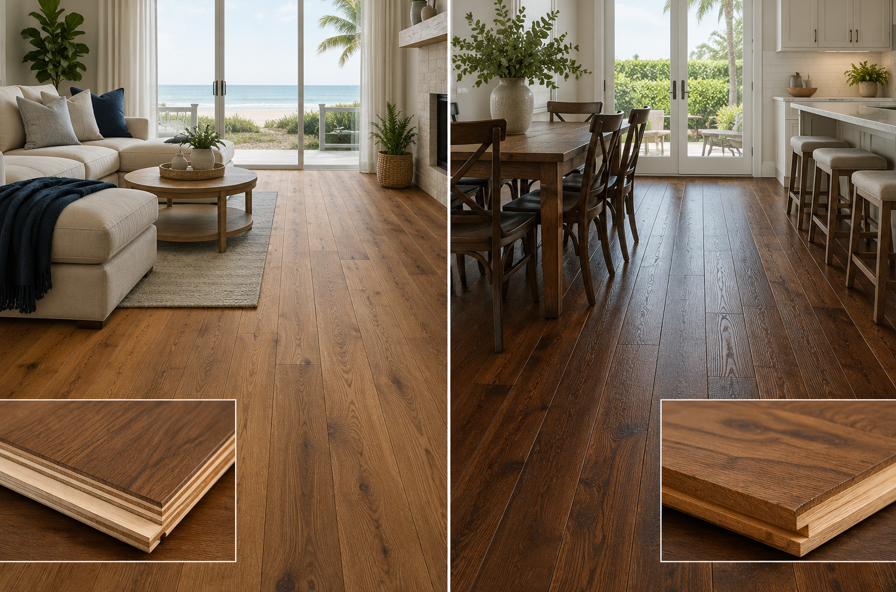
Engineered hardwood flooring also features genuine hardwood, but its construction differs significantly from solid hardwood.
Engineered hardwood consists of:
A real hardwood wear layer on the surface
Multiple layers of plywood or composite core material beneath
These layers are bonded together in alternating directions, creating a more stable structure.
Although the construction differs, the visible surface remains genuine hardwood.
In many cases, homeowners cannot visually distinguish between engineered and solid hardwood once the flooring is installed.
Benefits of Engineered Hardwood Flooring
Greater Stability
The layered construction helps engineered hardwood resist expansion and contraction caused by environmental changes.
This stability can be beneficial in homes that experience fluctuations in temperature or humidity.
Installation Flexibility
Engineered hardwood can often be installed over:
Concrete slabs
Existing flooring
Various subfloor types
Certain below-grade spaces
This flexibility makes it a popular option for many renovation projects.
Modern Design Options
Many contemporary flooring trends are widely available in engineered collections, including:
Extra-wide planks
Long board lengths
Matte finishes
Wire-brushed textures
Modern colour palettes
Budget-Friendly Options
Engineered hardwood is available across a wide range of price points, making it easier for homeowners to find a product that aligns with their renovation budget.
Appearance Comparison
One of the biggest misconceptions about engineered hardwood is that it looks noticeably different from solid hardwood.
In reality, both flooring types feature genuine wood surfaces.
High-quality engineered hardwood showcases:
Natural grain patterns
Authentic wood texture
Colour variation
Species-specific characteristics
When installed, the visual differences are often impossible to detect without examining a plank cross-section.
For most homeowners, appearance alone is not the deciding factor.
Instead, the choice typically comes down to performance requirements and long-term goals.
Which Flooring Performs Better in Huntington Beach?
Huntington Beach's coastal location creates unique environmental considerations.
Many local homeowners enjoy:
Ocean breezes
Open windows
Indoor-outdoor living
Natural ventilation
While Southern California generally experiences a mild climate, moisture and humidity fluctuations can still affect natural materials over time.
Engineered hardwood's layered construction provides greater dimensional stability, helping minimise movement caused by environmental changes.
This is one reason many homeowners choose engineered hardwood for coastal properties.
However, solid hardwood also performs exceptionally well when properly installed and maintained.
The best option depends on:
Your home's construction
Subfloor type
Room location
Household activity levels
Long-term renovation plans
Durability Comparison
Both flooring types are highly durable when quality products are selected.
Solid Hardwood Durability
Solid hardwood's durability comes from its thickness.
Because it can be refinished multiple times, many homeowners view it as a long-term investment.
Minor surface damage can often be repaired without replacing flooring.
Engineered Hardwood Durability
Engineered hardwood durability depends largely on the thickness of the wear layer.
Premium engineered products often provide excellent long-term performance and may be refinished at least once.
Lower-cost products typically offer fewer refinishing opportunities.
For busy households with children and pets, selecting a durable finish often matters more than whether the flooring is engineered or solid.
Installation Considerations
Installation requirements frequently influence project costs and timelines.
Solid Hardwood Installation
Solid hardwood generally requires:
Nail-down installation
Wood subfloors
Longer acclimation periods
Professional installation expertise
This can make installation more complex in some homes.
Engineered Hardwood Installation
Engineered hardwood offers greater flexibility.
Installation methods may include:
Floating
Glue-down
Staple-down
Nail-down
This versatility can simplify installation and expand placement options.
Homeowners interested in exploring available products can browse Sharon and Sons' extensive collection of hardwood flooring to compare styles, species, and finishes.
Maintenance Requirements
Fortunately, both flooring options are relatively easy to maintain.
Recommended care includes:
Sweeping regularly
Vacuuming with hardwood-safe attachments
Cleaning spills promptly
Using furniture pads
Avoiding excessive moisture
Maintaining stable indoor conditions can also help preserve flooring performance over time.
Proper maintenance protects your investment and helps maximise lifespan.
Cost Comparison
Budget plays a significant role in flooring decisions.
Several factors influence total project costs:
Flooring materials
Installation labour
Subfloor preparation
Underlayment
Trim and finishing materials
Solid hardwood often carries a higher upfront investment, particularly when premium species are selected.
Engineered hardwood offers more flexibility across various price ranges.
When comparing costs, homeowners should consider:
Longevity
Refinishing potential
Installation requirements
Maintenance needs
Resale value
The lowest purchase price does not always represent the best long-term value.
Hardwood Flooring Trends in Huntington Beach
Many Orange County homeowners are embracing flooring styles that create bright, sophisticated interiors while supporting California's indoor-outdoor lifestyle.
Popular hardwood trends include:
Wide Plank Flooring
Wide planks continue to dominate modern flooring design because they create a spacious and contemporary appearance.
Light Natural Tones
Natural oak finishes remain highly sought after because they complement bright Southern California interiors.
Matte Finishes
Matte finishes provide a modern aesthetic while helping minimise the visibility of everyday wear.
Wire-Brushed Textures
Textured surfaces add visual character while maintaining versatility across different design styles.
Warm Organic Colours
Many homeowners are moving away from cool grey tones and embracing warmer, more natural wood colours.
These trends can be found across both engineered and solid hardwood collections.
Which Option Is Right for Your Home?
Solid hardwood may be the ideal choice if you:
Plan to stay in your home for many years
Want maximum refinishing potential
Prefer traditional hardwood construction
Value long-term restoration flexibility
Engineered hardwood may be the better choice if you:
Have a concrete subfloor
Need greater installation flexibility
Want enhanced stability
Are balancing performance and budget
Neither option is universally better.
The right flooring depends on your home's unique requirements and your long-term goals.
Making a Confident Flooring Investment
Choosing new flooring involves more than selecting a colour or species.
Homeowners should evaluate:
Lifestyle needs
Family activity levels
Design preferences
Installation conditions
Long-term plans
Taking the time to compare options carefully can help ensure you choose a flooring solution that continues to perform beautifully for years to come.
Working with experienced flooring professionals can make the decision process significantly easier and provide valuable insight into which products are best suited for your home.
Visit Sharon and Sons for Hardwood Flooring Expertise
For more than four decades, Sharon and Sons has helped Orange County homeowners find flooring solutions that combine beauty, durability, and long-term value.
Our knowledgeable team can help you compare engineered and solid hardwood flooring, explore design options, and identify products that fit your home, lifestyle, and budget.
If you're planning a flooring renovation in Huntington Beach, we invite you to contact us or visit our Santa Ana showroom to see hardwood flooring options in person and receive expert guidance from a trusted local team.


