


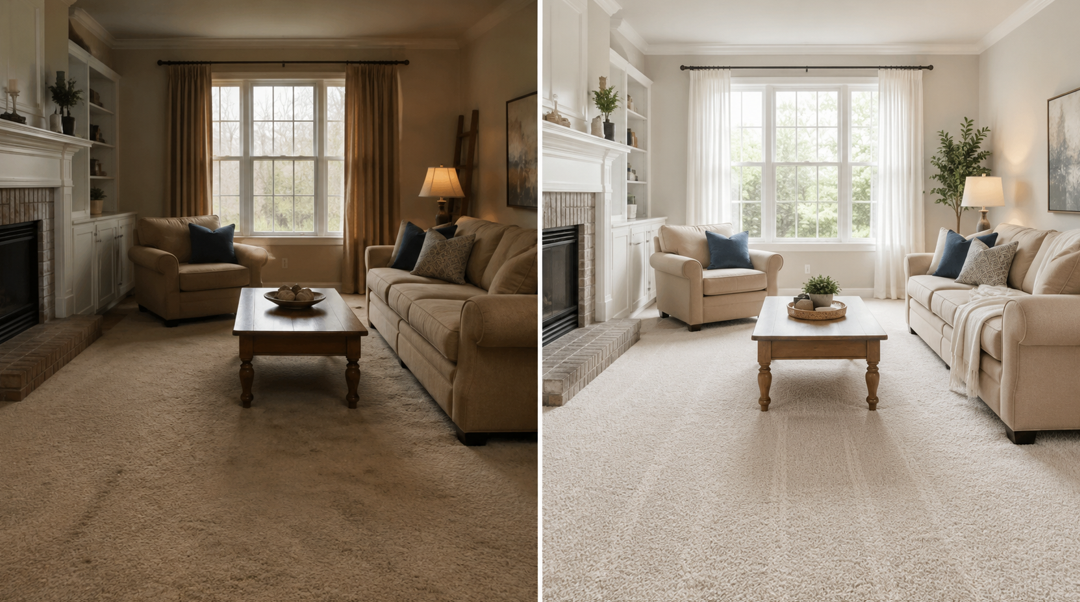
A room does not always need new furniture, major construction or a completely different layout to feel transformed. Sometimes, changing the surface beneath everything is enough to alter the room’s colour, comfort and overall atmosphere.
New carpet can make a space feel warmer, quieter and more complete. It can soften a bedroom, bring comfort to a family room or create visual continuity across an upstairs level. Because flooring covers such a large area, replacing an outdated, worn or poorly suited carpet often produces one of the most noticeable before-and-after changes in a home.
At Sharon and Sons, we have helped Orange County homeowners choose flooring for more than 40 years. Our family team understands that carpet selection is not simply about finding an attractive colour. The right carpet must complement the room’s light, furniture and architecture while supporting the household’s daily routine.
For homeowners in Fountain Valley and surrounding communities, carpet can be especially effective in bedrooms, upstairs areas, playrooms and comfortable living spaces. This guide explores how new carpet can transform different rooms and explains what to consider when planning your own before-and-after update.
Why Carpet Has Such a Strong Visual Effect
Flooring creates the background for nearly every other design choice in a room. Walls may establish colour, but the floor connects furniture, rugs, cabinetry and architectural details into one visual composition.
An old carpet can affect a room even when its condition is not immediately obvious. Faded areas, flattened fibres, visible seams or an outdated undertone may make the entire space feel tired. Furniture and paint colours can also appear different against flooring that is too dark, too cool or too strongly patterned.
New carpet changes several aspects of the room at once:
It establishes a fresh colour foundation.
It adds softness and texture.
It can make the room feel brighter or more grounded.
It creates a cleaner transition between connected spaces.
It can soften sound in busy or open areas.
It can make furniture and décor feel more intentional.
It may help bedrooms and lounges feel more comfortable and inviting.
The most successful transformations happen when the carpet is selected as part of the overall room rather than treated as an isolated purchase.
Before: A Room That Feels Dark and Dated
One common starting point is a room with dark, heavily coloured carpet. Deep brown, burgundy, forest green or gold flooring may have suited the home when it was installed, but these colours can absorb light and dominate the space.
In a room with limited natural light, dark carpet may make the walls seem closer and the furniture heavier. Even neutral furnishings can take on the carpet’s undertone, creating a space that feels visually crowded.
After: A Lighter, Warmer Foundation
Replacing a dark carpet with a lighter warm neutral can change the perceived scale of the room. Soft beige, oatmeal, warm greige or pale taupe reflects more light and creates a gentler connection between the floor and walls.
The new carpet does not need to be white or extremely pale. A mid-light neutral with subtle variation may provide brightness while remaining practical for daily life.
For rooms receiving strong California sunlight, it is important to test the colour at different times of day. A sample that looks beige under artificial showroom lighting may appear more golden in afternoon sun. A cool grey may develop an unexpected blue cast near large windows.
In many Orange County interiors, warm neutrals work particularly well because they complement cream walls, natural wood, stone and the sun-drenched character of the region.
The transformation becomes even stronger when the new carpet allows existing furniture to stand out rather than compete with the floor.
Before: A Hard, Echoing Living Space
Hard flooring is a practical and attractive choice for many areas, but using it throughout an entire home may create spaces that feel visually or acoustically hard. Large rooms with high ceilings, minimal window coverings and several reflective surfaces can feel less intimate than intended.
A sitting room or family lounge may look polished but still feel unfinished. Conversation, television and everyday movement may seem more noticeable when there are few soft materials to absorb sound.
After: A Comfortable, Defined Room
Installing carpet can visually define a lounge or family room and make it feel more relaxed. The softness underfoot creates an immediate contrast with adjoining tile, hardwood or laminate areas.
Carpet can also help large furniture pieces feel anchored. A sofa, armchairs and coffee table may appear more connected when placed on one continuous textured surface.
For a contemporary look, consider a low-profile textured carpet in a warm neutral. This offers softness without the formal appearance of a very dense or highly sculpted pile. A subtle linear or heathered design can add movement while remaining quiet enough to support patterned cushions, artwork or window treatments.
In an open-plan home, transitions must be carefully planned. The carpet should coordinate with the adjacent flooring without attempting to imitate it. A warm beige carpet may connect naturally with honey-toned hardwood, while a balanced taupe can complement warm stone or wood-look laminate.
The goal is a coordinated relationship between materials, not an exact colour match.
Before: A Family Room That Shows Every Mark
Busy rooms face different challenges. A family room may need to handle children, pets, snacks, toys and frequent movement. A carpet that is too pale, too uniform or poorly suited to heavy use may quickly show tracked-in particles, flattened pathways or small spills.
In an active Fountain Valley household, appearance must be balanced with realistic maintenance expectations. The most luxurious-looking sample may not be the best choice when the room is used throughout the day.
After: A More Forgiving Performance Carpet
Modern Carpet Flooring is available in a wide range of fibres, constructions and performance levels. For active rooms, the transformation is not only visual. Choosing a product designed for the household can make the space easier to maintain and more comfortable to use.
A medium neutral with blended colour variation is often more forgiving than a completely solid shade. Flecks or gentle tonal differences can disguise small particles between routine cleaning without creating an obvious pattern.
Pile construction also matters. A dense, low-to-medium pile may suit a heavily used family area better than a very long or loose texture. The carpet should recover well from foot traffic and support the way the room is used.
Households with pets may prioritise stain resistance, durability and a texture that does not easily catch claws. Families with young children may value softness and a comfortable surface for sitting or playing.
The best product is not automatically the thickest carpet. Density, fibre, twist, backing and installation all contribute to performance. Comparing specifications and explaining how the room is used will help the flooring team recommend suitable options.
Before: A Bedroom That Feels Unfinished
Bedrooms are highly personal spaces, but flooring is sometimes selected as an afterthought. A bedroom may contain beautiful furniture and carefully chosen bedding yet still feel incomplete because the carpet is worn, poorly coordinated or too similar in colour to the walls.
Older carpet may also have visible traffic patterns around the bed, wardrobe and doorway. Even when these signs are subtle, they can reduce the sense of calm the room is intended to provide.
After: A Softer Personal Retreat
New carpet can make a bedroom feel more restful by introducing a soft, continuous foundation. It creates warmth when stepping out of bed and can make the room feel quieter and more private.
Plush textures work particularly well in primary bedrooms and lower-traffic guest rooms. A cut-pile carpet can create a smooth, luxurious surface, while a textured construction may offer a more casual look and help disguise footprints.
Colour selection depends on the desired mood. Warm ivory and oatmeal can make the room light and airy. Taupe, mushroom and soft brown provide more depth. Deeper colours may create a cocooning effect in a large room, but they should be tested carefully because dark surfaces can influence how spacious the room feels.
Consider the colour of the bed, bedside furniture and window treatments. A warm carpet may support natural oak or walnut furniture, while a balanced neutral may work better with painted pieces or cooler fabrics.
The carpet does not need to match the bedding. Bedding can change easily, while flooring is a longer-term choice. Select a carpet that coordinates with the room’s permanent features and leaves flexibility for future décor updates.
Before: Disconnected Upstairs Rooms
When bedrooms, corridors and stairs have different or ageing carpets, the upper level may feel visually fragmented. One room may have beige flooring, another grey and the landing a patterned carpet from an earlier renovation.
Individual spaces may look acceptable on their own, but the transitions between them can make the home feel less cohesive.
After: Continuous Visual Flow
Using one carpet across stairs, landings and bedrooms can create a more unified appearance. The eye moves through the space without interruption, making the upper floor feel considered and complete.
Continuous carpet can be particularly effective in homes with compact corridors because fewer changes in colour and pattern reduce visual clutter. A consistent warm neutral also allows each bedroom to express a different personality through paint, bedding and furniture.
The same product is not always appropriate for every area. Stairs and corridors generally receive more concentrated traffic than bedrooms, so the carpet must be suitable for those conditions. Ask whether the selected style is recommended for stair installation and how its pattern or texture will appear on vertical risers and curved edges.
If different carpets are used, keep their undertones related. For example, a durable textured taupe on the stairs may connect well with a softer mushroom carpet in the primary bedroom.
How Colour Changes the Mood of a Room
Carpet colour can influence whether a room feels bright, warm, dramatic or calm.
Light Neutrals
Ivory, cream and pale beige create an open, airy appearance. They can brighten smaller rooms and work well in homes with a relaxed coastal or contemporary style.
However, very pale carpet may require more frequent attention in busy households. Consider how the room is used before choosing the lightest available shade.
Warm Midtones
Oatmeal, camel, warm greige and soft brown provide balance. They are light enough to keep a room welcoming but deep enough to feel grounded and practical.
These colours coordinate naturally with many of the materials found in Orange County homes, including warm white paint, oak cabinetry, natural stone and woven fabrics.
Cool Neutrals
Grey and blue-grey can look clean and modern, but they should be compared carefully with existing finishes. A cool carpet may make cream walls or warm wood appear more yellow by contrast.
Homeowners who like grey but want a softer result can consider greige or taupe, which contains more beige or brown.
Deeper Colours
Charcoal, chocolate and other deep shades can make large bedrooms, media rooms or formal spaces feel intimate. They may also show pale dust or pet hair more clearly, so maintenance should be considered.
Texture Can Transform the Space Too
Two carpets in the same colour can create very different effects depending on texture.
A smooth, dense cut pile can feel polished and luxurious. A casual textured carpet may feel relaxed and family friendly. Loop constructions can add definition and durability, while patterned carpets introduce architectural interest.
Texture also affects how light moves across the floor. Carpet fibres reflect light differently depending on their direction, which can create natural shading. Some styles show footprints or vacuum marks more clearly than others.
When viewing samples, brush the surface in different directions and look at it from several angles. A carpet that appears uniform from above may show greater tonal movement across a full room.
Larger samples are particularly helpful because small swatches do not always reveal the scale of a pattern or the full effect of the pile.
The Role of Carpet Padding
The material beneath the carpet is not visible after installation, but it affects comfort and performance. Suitable padding can provide support, help the carpet feel comfortable underfoot and contribute to the finished installation.
The thickest option is not always the correct one. Carpet manufacturers may specify a recommended padding type and thickness. Using an unsuitable product can affect how the carpet performs and may influence warranty coverage.
Different rooms may also have different priorities. A bedroom may emphasise softness, while stairs and busy corridors need stable support. The existing subfloor should be assessed before installation so that any issues can be identified and addressed.
Plan the Whole Room Before Selecting Carpet
A successful transformation begins with more than choosing a favourite sample.
Bring together the room’s important colours and materials:
Wall paint
Cabinetry or built-in furniture
Upholstery
Curtains or blinds
Adjacent flooring
Fireplace stone or tile
Large furniture pieces
Place carpet samples beside these elements rather than viewing them in isolation. The carpet should support the complete palette.
Also consider what is likely to change. Paint and accessories can be updated relatively easily, while built-ins, stone and major flooring transitions are more permanent. Prioritise coordination with the features that will remain in place.
In bright rooms, move samples between direct sunlight and shaded areas. Review them during the evening under the room’s artificial lighting. This process reduces the risk of discovering an unwanted undertone after installation.
Common Before-and-After Mistakes
Choosing from a Small Sample Alone
A small swatch may not show the complete colour variation or pattern. Whenever possible, view a larger sample and place it flat on the floor.
Selecting Carpet Before Considering Adjacent Flooring
The transition between carpet and hard flooring is highly visible. Compare the two materials directly and consider their colour, height and edge treatment.
Prioritising Softness Over Performance
A very soft carpet may feel impressive in the showroom, but the construction must suit the room’s traffic level and maintenance needs.
Ignoring Natural Light
Orange County sunlight can intensify warm undertones and reveal colour differences that are less noticeable indoors. Samples should be viewed in the actual space.
Assuming Every Neutral Coordinates
Beige, grey, taupe and cream can have very different undertones. A neutral carpet can still clash with paint, stone or furniture.
Overlooking Installation Details
Seam placement, carpet direction, stair installation and subfloor preparation all affect the final appearance. Professional planning is part of achieving a polished transformation.
How to Prepare for a Carpet Consultation
Before visiting a showroom or arranging a home consultation, gather basic information about the project.
Measure the approximate room dimensions, but remember that professional measurements will still be needed. Take photographs showing the room, windows, doorways and adjacent flooring. Bring samples of paint, cabinetry or fabric when possible.
Be ready to explain:
Who uses the room
Whether children or pets are present
How much foot traffic the area receives
Which colours and textures you prefer
How often you expect to clean the carpet
Whether the carpet will continue onto stairs or landings
Your approximate project budget
Your preferred installation timing
Honest information helps the flooring team narrow the selection and explain the trade-offs between different products.
Create Your Own Carpet Transformation
New carpet can change much more than the appearance of the floor. It can brighten a dark room, soften an open living space, make a bedroom feel restful or bring several disconnected areas together.
The strongest before-and-after results come from selecting a carpet that fits the whole room and the way the household lives. Colour and texture establish the design, while fibre, construction, padding and professional installation influence long-term performance.
For homeowners planning a carpet update in Fountain Valley, Sharon and Sons offers personalised guidance backed by more than 40 years of family flooring experience. Our team can help you compare colours, textures and performance options while considering your home’s lighting, décor and everyday needs.
Visit our Santa Ana showroom to explore carpet samples in person, or contact us to discuss a home consultation and professional installation.


