


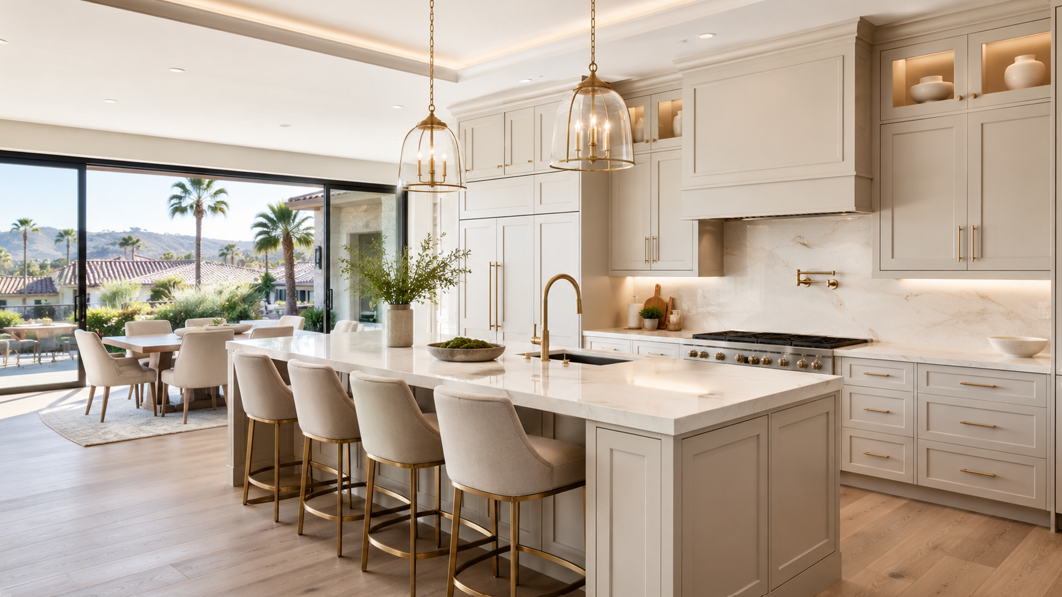
A well-designed kitchen should feel beautiful the moment you enter it, but true luxury goes beyond appearance. It is found in the way drawers glide, how storage is planned, how finishes respond to natural light and how every detail supports the household’s daily routine. For homeowners considering a high-end kitchen renovation, cabinetry is often the most important design decision because it shapes both the look and function of the entire room.
At Sharon and Sons, we help Orange County homeowners create kitchens that feel personal, practical and built to last. With more than 40 years of family experience, our team understands that premium design is not about choosing the most expensive option in the showroom. It is about selecting the right materials, proportions, storage solutions and finishing details for the home, the lifestyle and the long-term vision.
For Irvine homes, where clean architecture, bright interiors and thoughtful use of space are common priorities, luxury cabinets can bring warmth and individuality to a contemporary kitchen. Whether the goal is a calm minimalist space, a layered transitional design or a statement kitchen made for entertaining, the best results begin with careful planning.
What Makes Kitchen Cabinets Feel Luxurious?
Luxury cabinetry is not defined by one door style, wood species or colour. It comes from the overall quality of the design and how well the finished kitchen works for the people who use it.
Premium cabinetry usually brings together several elements:
Proportions that suit the room rather than forcing a standard layout
Durable cabinet boxes, doors, drawer systems and hardware
Storage designed around the household’s habits
Consistent reveals, alignment and spacing
Finishes with depth, texture and lasting visual appeal
Thoughtful integration of appliances, lighting and work zones
Professional installation that allows every component to perform correctly
A kitchen can look impressive in photographs and still be frustrating in daily life. Deep shelves may hide items at the back. Poorly positioned drawers may clash with appliance doors. An oversized island may interrupt movement rather than improving it. Premium design avoids these problems by treating function and appearance as equal priorities.
The result should feel effortless. Doors align cleanly, frequently used items are easy to reach and the kitchen supports cooking, conversation and entertaining without unnecessary clutter.
Start with the Way You Use the Kitchen
Before choosing finishes, consider how the kitchen functions from morning to evening. A household that prepares most meals at home may need generous preparation space, specialised drawer storage and easy access to cookware. A family that entertains regularly may place more emphasis on a large island, beverage storage and a secondary serving zone.
Useful questions include:
How many people commonly cook at the same time?
Which appliances are used every day?
Where do groceries enter the room?
Is the island mainly for preparation, seating or serving?
Are small appliances kept on the counter or stored away?
Does the household need child-friendly, pet-friendly or accessible storage?
Which parts of the existing kitchen cause the most frustration?
These answers help determine where drawers, cabinets and work surfaces should go. They also reveal where a premium feature will make a meaningful difference and where a simpler solution may be more sensible.
A good design does not add features simply because they are available. It prioritises the details that improve the household’s real routine.
Choose a Cabinet Style That Belongs in the Home
The most successful luxury kitchens feel connected to the architecture around them. A highly ornate cabinet may look out of place in a clean-lined contemporary home, while an extremely plain slab door may feel too stark in a traditional interior.
Slab Cabinets
Flat slab doors create a streamlined, modern appearance. They work particularly well with integrated appliances, minimal hardware and continuous runs of cabinetry. Wood veneer, painted finishes and textured laminates can all be used to give a slab kitchen more warmth and character.
Shaker Cabinets
Shaker-style doors remain popular because they are versatile. A narrow rail and stile profile can feel contemporary, while a wider or more detailed frame can lean traditional. The final effect depends heavily on the colour, hardware, worktops and surrounding materials.
Inset Cabinets
Inset doors and drawers sit within the cabinet frame rather than covering it. This creates precise lines and a furniture-like appearance. The style requires careful construction and installation because the spacing around each door must remain consistent.
Transitional Cabinetry
Transitional kitchens combine clean forms with selected traditional details. A simple framed door, warm finish and understated hardware can create a polished kitchen that feels refined without appearing formal.
For many Irvine homeowners, the goal is not to reproduce a showroom style exactly. It is to create a tailored version that feels appropriate for the home and can adapt as furnishings and colour preferences change.
Premium Materials and Finishes
Cabinet doors occupy a large visual area, so material and finish choices have a major effect on the room.
Natural Wood
Natural wood brings grain, variation and warmth. White oak, walnut and other premium species can make a contemporary kitchen feel more inviting. Rift-cut and quarter-sawn veneers provide a more consistent grain pattern, while solid wood may show greater natural variation.
Wood should be selected with realistic expectations. It can change slightly with age and light exposure, and no two boards will be identical. For many homeowners, that natural development is part of its appeal.
Painted Cabinetry
Painted finishes offer broad colour flexibility and can create either a crisp or soft appearance. Warm whites, muted greens, taupe, mushroom and deep blue-grey are all options for a premium kitchen. The preparation and finishing process matters because smooth surfaces, clean edges and consistent coverage contribute to the final quality.
Textured and Matte Finishes
Matte finishes reduce glare and suit the calm, understated direction seen in many modern homes. Textured surfaces can add depth, especially when used on an island, pantry wall or selected upper cabinets. These finishes should be evaluated for cleanability and how they respond to fingerprints and daily handling.
Mixed Materials
Combining materials can make a kitchen feel more considered. Painted perimeter cabinets may be paired with a natural wood island. A tall wall of walnut may contrast with warm white lower cabinets. Glass-fronted sections can break up a long run and provide space for display.
The key is restraint. Too many competing materials can make even an expensive kitchen feel unsettled.
Colour Choices for a High-End Kitchen
Luxury does not require a dark or dramatic palette. Many premium kitchens use soft, natural colours and rely on proportion, texture and craftsmanship for impact.
Warm white remains a reliable choice because it reflects California light and allows stone, flooring and furniture to stand out. However, the undertone must coordinate with the rest of the room. A creamy white may clash with blue-white quartz, while a cooler white may feel disconnected from warm wood flooring.
Natural oak and walnut bring warmth without depending on paint colour. Muted green can create a calm connection to outdoor landscaping, while taupe and mushroom provide a softer alternative to grey. Deeper colours can work beautifully on an island or full cabinet wall when balanced with lighter surfaces.
Always view samples beside the planned flooring, worktop and splashback. In sun-filled Orange County interiors, the same cabinet colour can look different in morning light, afternoon sun and artificial evening lighting.
Storage That Feels Designed, Not Added Later
One of the clearest differences between standard and premium cabinetry is the level of storage planning. Rather than filling the room with generic cupboards, a tailored design gives each category of item an appropriate home.
Useful options include wide pan drawers, tray dividers, spice pull-outs, integrated waste storage, accessible corner systems, full-height pantries, appliance garages and fitted drawer inserts. The right combination depends on what the household stores and how often each item is used.
The aim is not to include every accessory. It is to reduce unnecessary movement and keep the most-used items close to where they are needed.
For example, dishes may be stored in a deep drawer near the dishwasher. Baking sheets may sit vertically beside the oven. Coffee supplies may be grouped near a dedicated beverage area. These decisions make the kitchen easier to use every day and help worktops remain uncluttered.
Designing a Statement Island
In many luxury kitchens, the island is the visual and functional centre of the room. It may provide preparation space, seating, storage, a sink, appliances or a combination of these.
A successful island begins with proportion. It should be large enough to be useful but not so large that reaching the centre becomes awkward. Walkways must allow cabinet doors, appliances and people to move comfortably. Seating should not interfere with major work zones.
The island can also introduce contrast. A natural wood finish can warm up painted perimeter cabinets. A deeper colour can anchor a bright room. Decorative panels, integrated shelving or furniture-style legs can create a more distinctive appearance, although these details should suit the overall style.
Before adding a sink or cooktop, consider how the island will be used during gatherings. Some homeowners prefer an uninterrupted surface for serving and conversation. Others value having the main preparation zone face the room. There is no universal answer; the correct choice depends on the household.
Integrating Appliances and Technology
Premium cabinetry can make appliances feel part of the architecture. Panel-ready refrigerators and dishwashers can sit behind matching fronts, while microwave drawers, beverage units and concealed small-appliance storage preserve clean sightlines.
Plan lighting, power points, charging areas and ventilation before the cabinets are ordered. A decorative hood may become a focal point, while a concealed system supports a more minimal design, but performance and clearance requirements must guide the decision.
Hardware: The Detail You Feel Every Day
Handles, hinges and drawer slides affect both appearance and daily experience. Brushed brass or bronze adds warmth, polished nickel brings brightness and black hardware creates definition against pale cabinets.
Choose a scale that suits each door and drawer, and test handles by hand where possible. Soft-close hinges and full-extension drawer systems may be less visible than the finish, but they strongly influence long-term satisfaction.
Why Professional Cabinet Design Matters
Cabinetry affects nearly every other part of a kitchen renovation. Measurements influence appliance fit, worktop fabrication, splashback installation, lighting and plumbing. Small errors can create visible alignment problems or require costly adjustments later.
Working with experienced Cabinetry professionals allows the design to be reviewed as a complete system. Door swings, fillers, clearances, panel sizes and installation conditions can be considered before products are ordered. Three-dimensional renderings can also help homeowners understand the scale, colour balance and overall layout before committing to the final design.
Professional guidance is especially valuable when combining stock and custom elements, integrating unusual appliances or planning cabinetry around architectural features. It can also help establish priorities when the budget needs to be distributed across cabinets, worktops, flooring and installation.
Setting a Realistic Premium Kitchen Budget
Luxury design should begin with a clear financial framework. Cabinet costs are influenced by construction, material, finish, customisation, accessories, hardware and installation complexity. A fully custom painted kitchen will generally require a different investment from a stock or semi-custom layout with limited modifications.
It is useful to separate essential priorities from desirable extras. Durable construction, functional storage and professional installation usually deserve attention before decorative features that have little effect on daily use.
Budget should also account for related work, such as demolition, electrical changes, plumbing, flooring, worktops and painting. A cabinet quote alone does not represent the complete renovation cost.
An experienced design team can help identify where customisation provides real value. A bespoke pantry wall may solve a major storage problem, while a standard cabinet size may work perfectly in another area. Premium results often come from spending selectively rather than making every component custom.
Common Luxury Cabinetry Mistakes to Avoid
Choosing Appearance Before Layout
A beautiful door style cannot compensate for an awkward kitchen. Resolve movement, storage and appliance placement before focusing on colour.
Overdesigning the Space
Too many finishes, feature doors and decorative details can compete for attention. A strong focal point is usually more effective than several unrelated statements.
Ignoring Lighting Conditions
Cabinet colours change under natural and artificial light. Samples should be viewed in the room and beside other permanent finishes.
Making the Island Too Large
An oversized island can reduce walkway space and make cleaning or reaching the centre difficult. Bigger is not automatically better.
Underestimating Installation
Even excellent cabinetry may look disappointing if it is poorly fitted. Floors, walls and ceilings are not always perfectly level, so installation requires skill and adjustment.
Following a Trend Without Considering the Home
Current ideas can provide inspiration, but the final kitchen should suit the architecture and the homeowner’s taste. A timeless base with selected contemporary details often ages more gracefully than a room built around one short-lived look.
Creating a Kitchen That Feels Personal
The most memorable luxury kitchens are not simply expensive. They reveal something about the people who live there.
A family that cooks together may prioritise generous preparation space and accessible storage. A homeowner who collects ceramics may include illuminated glass cabinets. Someone who entertains may create a separate beverage station or serving pantry. A household that values calm surfaces may hide small appliances and maximise closed storage.
Personalisation can also be subtle. A favourite wood species, a carefully selected handle or a cabinet colour inspired by the surrounding landscape may be enough to make the room distinctive.
The design should feel considered rather than crowded with features. Every element should have a reason for being there.
Plan Your Irvine Kitchen with Confidence
Premium cabinetry can transform a kitchen by improving how the space looks, feels and functions. The strongest designs balance quality materials with careful planning, practical storage and details that suit the home rather than simply following a formula.
For homeowners planning a kitchen renovation in Irvine, the process should include time to compare samples, review layout options and understand how cabinetry will connect with flooring, worktops, lighting and appliances. With more than four decades of family experience, Sharon and Sons provides personalised guidance, three-dimensional design support and professional installation for projects of different styles and budgets.
To discuss cabinet options, visit the Santa Ana showroom or contact us to arrange a consultation.


