


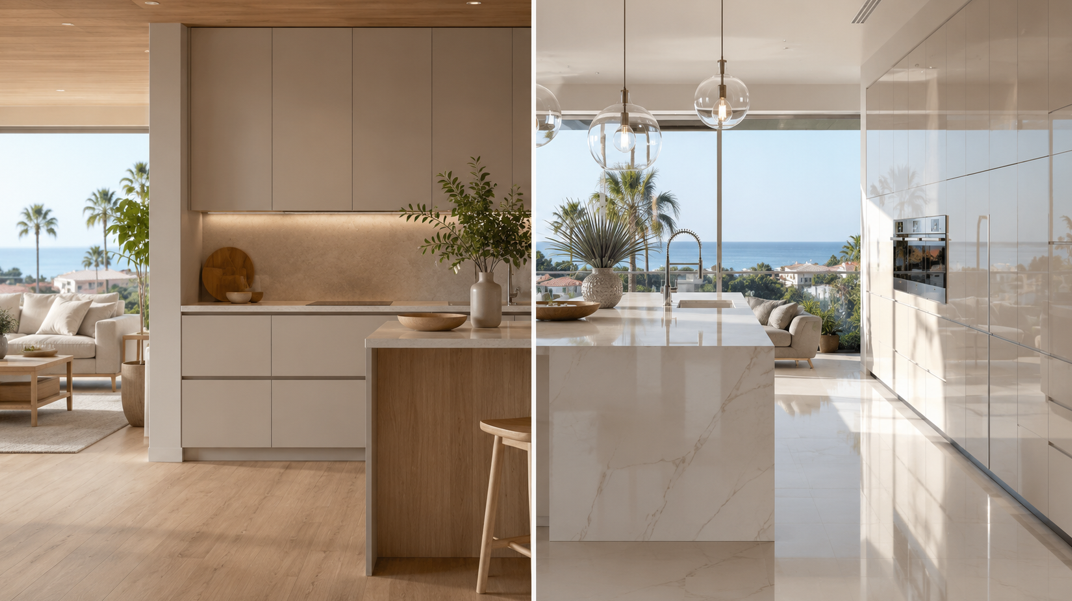
The finish of a laminate floor can change the entire character of a room. Two floors with nearly identical colours and plank patterns may look completely different depending on how much light their surfaces reflect.
A matte finish can create a soft, natural and understated appearance. A glossier surface can make colours appear richer and give the room a more polished quality. Neither option is automatically better. The right choice depends on the home’s lighting, interior style, daily activity and the atmosphere the homeowner wants to create.
At Sharon and Sons, we have spent more than 40 years helping Orange County homeowners compare flooring options based on real-life needs rather than appearance alone. Our family team considers how a floor will look in the home, how it will perform in the intended room and how comfortably it fits the customer’s maintenance expectations and budget.
For homeowners in Costa Mesa, where contemporary design, strong natural light and active indoor-outdoor lifestyles often influence renovation decisions, the choice between matte and gloss deserves careful consideration. This guide explains how each finish affects a laminate floor and how to decide which one belongs in your space.
What Is a Laminate Floor Finish?
The finish refers to the appearance and texture of the laminate’s upper surface. It affects the way the floor reflects light, displays colour and reveals the printed wood or stone pattern beneath the protective wear layer.
Matte and gloss are often discussed as two opposite choices, but finishes exist across a spectrum. A floor may be described as:
Extra matte
Matte
Low sheen
Satin
Semi-gloss
High gloss
Product names are not always consistent between manufacturers. One collection’s satin surface may resemble another collection’s low-gloss finish. For that reason, it is more useful to view physical samples than to rely entirely on the description.
Texture also plays a role. A matte plank may be smooth, lightly embossed or deeply textured to follow the printed grain. A glossy plank may have a polished surface or a subtler sheen that becomes more visible under direct light.
The finish is therefore not a separate coating chosen after the flooring is purchased. It is part of the product’s overall design and should be evaluated alongside colour, pattern, plank size, edge detail and performance specifications.
The Look of Matte Laminate Flooring
Matte laminate reflects less direct light than a glossy floor. Instead of creating noticeable highlights across the surface, it distributes light more softly.
This can give wood-look laminate a natural, relaxed appearance. Grain, knots and tonal changes remain visible, but the surface is less likely to appear polished or reflective. Matte finishes are particularly effective when the goal is to recreate the understated character of natural timber.
In a modern room, matte laminate can make clean lines feel warmer and less severe. In a casual family home, it can support an inviting, comfortable atmosphere. It also coordinates well with other low-sheen materials, such as honed stone, textured fabrics, brushed metal and flat-panel cabinetry.
Popular matte looks include:
Natural white oak
Warm beige and greige
Light maple
Toasted oak
Medium walnut
Weathered brown
Soft concrete and stone effects
The most current matte floors tend to favour realistic colour movement rather than completely uniform planks. Gentle variation helps the floor feel more natural and adds depth without requiring a highly reflective surface.
The Look of Gloss Laminate Flooring
Gloss laminate reflects more light, creating visible highlights across the planks. This can make the floor appear smoother, richer in colour and more formal.
A glossy finish may work well in a room where the floor is intended to be a prominent design feature. Dark wood effects can look deeper, while lighter colours may appear brighter under artificial or natural light.
Gloss can support a polished contemporary interior, particularly when paired with streamlined furniture, glass, metallic details and smooth cabinetry. It may also suit formal dining rooms or selected low-traffic areas where visual impact is a priority.
However, gloss does not always mean mirror-like shine. Many laminate products use a restrained sheen that sits between satin and high gloss. This can provide a more refined appearance without creating the strong reflections associated with highly polished floors.
Because glossy flooring interacts so noticeably with light, samples should be viewed flat on the floor rather than held upright. The angle of the surface changes how much reflection is visible.
Matte vs. Gloss: The Main Design Difference
The central difference is not simply shine. It is the way each finish shapes the room’s visual mood.
Matte flooring tends to feel:
Natural
Calm
Soft
Contemporary
Casual
Understated
Gloss flooring tends to feel:
Polished
Formal
Bright
Dramatic
Sleek
Decorative
These descriptions are not strict rules. A pale glossy floor can still feel relaxed, and a dark matte floor can create considerable drama. Colour, plank format, pattern and surrounding décor all influence the final result.
The best approach is to decide how much attention the floor should attract. A matte finish usually allows furniture, artwork and architectural features to lead the design. A glossier finish can make the flooring itself a stronger visual element.
How Costa Mesa Light Affects the Finish
Natural light is one of the most important considerations when comparing finishes. Costa Mesa homes may receive bright sunlight through large windows, sliding doors or open-plan living areas connected to patios and gardens.
Under strong sunlight, a glossy floor may create more visible reflections. Depending on the product and the room, this can make the space feel bright and energetic or produce more shine than the homeowner expected.
A matte floor absorbs and diffuses light more gently. This can help a bright room feel balanced and prevent large flooring areas from competing with windows, stone surfaces or polished worktops.
The direction of the windows matters as well. Morning light may create a different effect from direct afternoon sun. Artificial lighting can also alter the appearance during the evening.
When comparing samples:
Place them flat in the intended room.
View them near windows and in shaded areas.
Check them during the morning and afternoon.
Look at them under the room’s evening lighting.
Compare them beside the planned paint, cabinetry and furniture.
A finish that looks subtle under showroom lighting may become much more reflective in a sun-filled living room.
Which Finish Looks More Like Natural Wood?
For homeowners seeking the appearance of natural timber, matte or low-sheen laminate is generally the more convincing direction.
Most unfinished or naturally finished wood does not have a mirror-like surface. A matte finish allows the printed grain and embossed texture to carry the design without a layer of visible shine across it.
Products with texture aligned to the printed pattern can create greater visual depth. Grain lines, knots and tonal variation may appear more realistic when the surface catches light unevenly rather than reflecting it uniformly.
This does not mean every matte laminate looks authentic. Pattern quality, repetition, plank dimensions and edge detailing are equally important. A highly realistic surface can still look manufactured if the same knot or grain feature repeats too frequently.
When shopping, lay several planks or larger sample boards together. This makes it easier to judge variation and identify repeated patterns.
Gloss laminate can still create an attractive wood effect, but it usually feels more stylised or polished. That may be exactly what the room needs, particularly in a formal or contemporary design.
Which Finish Is Easier to Maintain Visually?
Every floor requires routine cleaning, but the finish affects how readily certain marks are seen.
Glossy surfaces may make dust, footprints, smudges or fine surface marks more noticeable because reflected light highlights differences across the floor. This can be particularly apparent near large windows or under directional lighting.
Matte surfaces often disguise everyday marks more effectively because they create fewer sharp reflections. A textured or varied matte floor may be especially forgiving in busy areas.
However, colour can matter as much as sheen. Very dark matte flooring may still show pale dust and pet hair. Extremely light flooring may reveal tracked-in soil. A medium tone with natural variation is often the most practical visual choice for an active household.
Cleaning expectations should be realistic. A homeowner who enjoys a highly polished appearance and is comfortable with more frequent attention may be very satisfied with gloss. A household seeking a more relaxed surface may prefer matte.
Always follow the product manufacturer’s care instructions. Strong chemicals, waxes or abrasive tools should not be used unless specifically approved for the flooring.
Choosing a Finish for Active Family Areas
Kitchens, family rooms, entrances and connecting corridors experience frequent movement. In these spaces, the floor must support daily life as well as the design.
For an active household, matte laminate is often appealing because it can make small marks and particles less visually prominent. A low-sheen surface also fits naturally with casual furniture, textured fabrics and open-plan living.
The floor’s performance cannot be judged by sheen alone. Homeowners should also compare:
Wear rating
Scratch resistance
Stain resistance
Moisture protection
Warranty terms
Approved room applications
Cleaning instructions
Installation requirements
A matte appearance does not automatically make one product more durable than a glossy one. Durability depends on the product’s construction and specifications.
The floor should be selected for the actual room. A product suited to a low-traffic bedroom may not be the best option for a busy kitchen or main entrance.
Choosing a Finish for Kitchens
Laminate can provide a warm wood appearance in a kitchen without requiring every material to be natural timber. The finish should coordinate with cabinet doors, worktops, splashbacks and appliances.
Matte laminate works particularly well with:
Warm white cabinetry
Natural oak cabinets
Flat-panel doors
Honed or lightly textured stone
Brushed brass or black hardware
Soft neutral colour palettes
A glossy floor may coordinate effectively with:
High-gloss cabinetry
Polished stone
Glass splashbacks
Chrome or polished metal
Minimalist furniture
Strong colour contrast
Be careful when combining several reflective surfaces. Glossy cabinets, polished worktops and a high-sheen floor may create more glare than expected. Mixing sheen levels often produces a more balanced result.
For example, matte flooring can ground glossy cabinets, while a subtle satin floor may bring light to a kitchen with flat, low-sheen surfaces.
Choosing a Finish for Living Rooms
Living rooms provide more freedom because they usually face fewer moisture and spill concerns than kitchens or entrances.
A matte wood-look laminate can create a comfortable foundation for linen upholstery, woven rugs, timber furniture and relaxed coastal décor. It allows the room to feel warm without becoming overly rustic.
Gloss laminate may suit a more formal living room with structured furniture, glass tables and dramatic lighting. It can also help define the floor in a clean, minimal interior.
Consider the relationship between the flooring and area rugs. A glossy surface may create a strong contrast with a thick textured rug, while a matte floor produces a softer transition.
The scale of the room matters too. In a large room, sheen may be more noticeable because there is a greater uninterrupted surface area. In a smaller room, a controlled amount of reflection may add brightness.
Choosing a Finish for Bedrooms
Bedrooms often benefit from quiet, low-reflection materials. Matte or low-sheen laminate can create a calm foundation and help the room feel restful.
Warm oak, pale greige and medium brown finishes coordinate naturally with upholstered beds, soft bedding and fabric window treatments. A subtle texture can add interest without making the floor visually dominant.
A glossy finish may be suitable for a bedroom with a glamorous or highly polished design, but consider how it will look under bedside lighting and morning sun.
Comfort underfoot can also be improved with an appropriately sized area rug. The rug should complement the flooring rather than cover so much of it that the chosen finish has little visual impact.
How Finish Changes the Appearance of Colour
Sheen can affect how deep or bright a colour appears.
A glossy dark-brown laminate may look richer and more dramatic because reflected light increases contrast across the plank. The same colour in matte may feel softer, more natural and slightly lighter.
Pale gloss flooring can appear bright and clean, although reflections may make the surface pattern more noticeable. Pale matte flooring often feels more relaxed and understated.
Warm tones, including honey oak, caramel and chestnut, can become especially luminous in gloss. If the product already contains strong golden or red undertones, the sheen may intensify them under sunlight.
Cool greys may look sharper in gloss and softer in matte. Homeowners moving away from the cool-grey trend may prefer warm greige or natural oak in a low-sheen finish.
The finish should therefore be compared together with colour. It is difficult to choose one independently from the other.
Coordinating Matte and Gloss Across the Room
A successful interior usually contains a mixture of surface finishes. When everything is matte, the room may lack contrast. When every surface is glossy, the space may feel visually busy.
Flooring provides an opportunity to create balance.
A matte floor can be paired with:
Polished worktops
Glossy ceramic tile
Glass lighting
Metallic accessories
Satin-painted cabinetry
A glossy floor can be balanced with:
Textured upholstery
Matte walls
Natural timber
Woven window coverings
Honed stone
The goal is not to match every sheen. It is to create a hierarchy so that the room has both quiet surfaces and selected highlights.
In contemporary Orange County interiors, a low-sheen floor often provides a flexible base because it allows sunlight, art, furniture and decorative finishes to attract attention.
Plank Format and Texture Matter Too
Finish is only one part of the floor’s design. Plank width, length, edge detail and texture may have an equal effect on the final appearance.
Wide planks tend to create a calmer, more open look because there are fewer seams across the room. They can make a matte wood effect feel especially natural.
Narrower planks introduce more lines and visual movement. In gloss, those lines may be emphasised by reflected light.
Bevelled edges define each plank and can make the floor resemble individual timber boards. Square edges create a smoother, more continuous surface.
Embossed texture can support realism, particularly in matte products. Smooth surfaces may feel more formal and can suit glossy or satin designs.
Compare the complete product rather than choosing a finish label alone. A matte floor with the wrong colour or pattern will not suit the room simply because matte is currently popular.
Common Mistakes When Comparing Finishes
Choosing from Online Images
Photographs are affected by editing, lighting and screen settings. A finish that looks matte online may have more sheen in person.
Holding Samples Upright
Flooring reflects light differently when laid flat. Always evaluate samples at the angle at which they will be installed.
Ignoring Window Placement
Direct sunlight can reveal reflections and surface marks that are not visible in a showroom.
Assuming Matte Means Dull
A matte floor can still have rich colour, detailed grain and considerable depth. It simply reflects light more softly.
Assuming Gloss Makes a Room Larger
Reflection may increase brightness, but room size is also influenced by colour, plank direction, furniture and wall treatment.
Choosing Appearance Without Checking Performance
Finish does not replace the need to assess the wear layer, moisture rating, warranty and approved applications.
Using Too Many Glossy Materials
Gloss flooring, glossy cabinets and polished worktops may compete with one another. A mixture of sheen levels usually creates better balance.
How to Make the Final Choice
Begin with the room rather than the sample display.
Ask how much natural light the space receives, how heavily it is used and whether the floor should be a quiet background or a prominent feature. Consider the surfaces already present and decide whether the room needs more softness or more polish.
Matte laminate may be the stronger choice when:
A natural wood appearance is the priority.
The room receives strong direct sunlight.
The household prefers a relaxed, understated interior.
Everyday marks should be less noticeable.
Other materials already provide shine.
Gloss laminate may be suitable when:
The homeowner wants a polished or formal appearance.
The floor is intended to be a design feature.
The room has controlled or limited natural light.
The surrounding surfaces are mostly matte.
More frequent visual maintenance is acceptable.
A satin or low-gloss option can provide a middle ground. It offers some reflected light without the intensity of a highly polished finish.
Compare Laminate Finishes in Person
Matte and gloss laminate can both create attractive interiors, but they respond differently to light, colour and everyday activity. Matte finishes generally feel softer and more natural, while glossier surfaces create a brighter, more polished impression.
The right decision should reflect the home’s architecture, lighting and lifestyle rather than a trend alone. Physical samples are essential because finish descriptions and online photographs cannot show exactly how a floor will behave in a specific room.
Homeowners exploring Laminate Flooring for a Costa Mesa renovation can compare wood looks, plank formats, textures and sheen levels with guidance from the Sharon and Sons team. With more than four decades of family flooring experience, we help customers understand the benefits and trade-offs of each option before making a long-term choice.
Visit our 6,000-square-foot Santa Ana showroom to see laminate finishes under real lighting, or contact us to arrange a consultation and discuss professional installation.


