


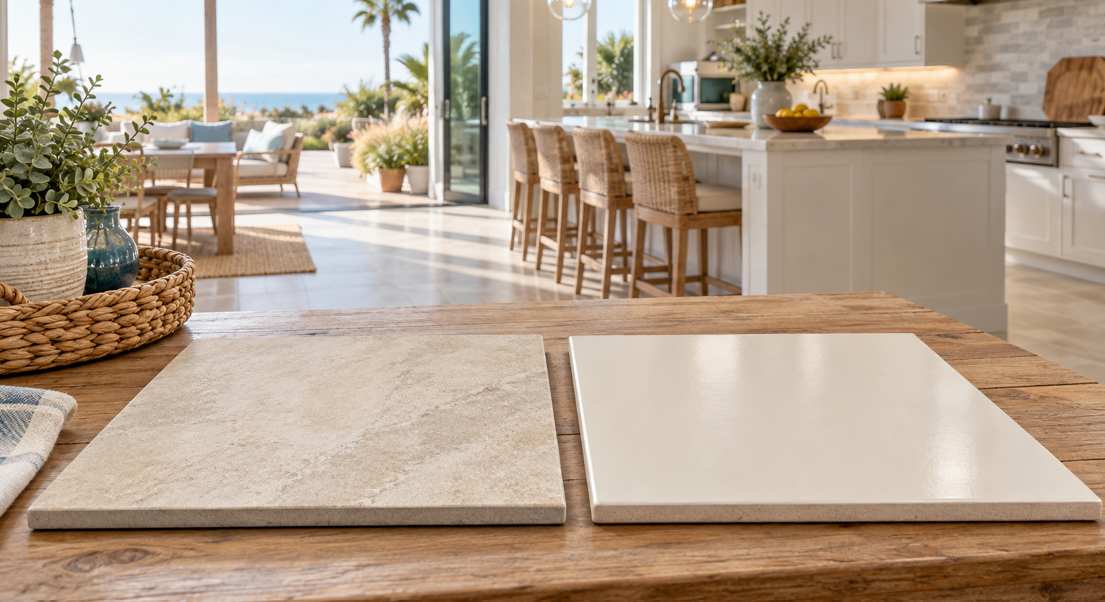
Tile has a natural place in Huntington Beach homes. It stays cool on warm days, handles sand and water with ease, and suits everything from Mediterranean-style houses to modern coastal remodels. But when you start shopping, one question comes up right away: porcelain or ceramic?
At Sharon and Son's Flooring & Cabinets, we have helped Orange County families choose the right tile for more than 40 years. In this guide, we explain the real differences between porcelain and ceramic tile, where each one works best, and how to choose the right fit for your home and lifestyle.
What Is Ceramic Tile?
Ceramic tile is made from clay that is shaped and fired in a kiln. It is then glazed to create color, pattern, and a protective surface.
Benefits of Ceramic Tile
Wide variety of colors, shapes, and patterns
Lighter weight, which makes it easy to use on walls
Easier to cut, which helps with detailed layouts
Great value for backsplashes, bathrooms, and accent walls
Points to Consider
Ceramic is more porous than porcelain.
It is better suited to indoor spaces with moderate traffic.
Chips can show the different-colored body beneath the glaze.
What Is Porcelain Tile?
Porcelain is a type of ceramic tile made from finer, denser clay and fired at higher temperatures. The result is a harder, less porous tile.
Benefits of Porcelain Tile
Highly water resistant, with very low absorption
Extremely durable for high-traffic areas
Suitable for indoor and many outdoor spaces
Through-body options where color runs all the way through
Realistic wood, stone, and concrete looks
Points to Consider
Porcelain is heavier and harder to cut, so professional installation matters.
It is often priced a bit higher than ceramic.
Comparing Porcelain and Ceramic
Durability
Porcelain is denser and tougher, making it ideal for busy floors, entryways, and outdoor spaces. Ceramic works beautifully on walls and in lighter-traffic rooms.
Water Resistance
Porcelain absorbs very little water, which is a big advantage in bathrooms, showers, and near pool areas. Glazed ceramic handles everyday splashes well indoors.
Style
Both offer stunning design choices. Ceramic shines with colorful glazes and handmade looks. Porcelain excels at realistic wood, marble, and large format designs.
Cost
Ceramic is often the more budget-friendly option. Porcelain costs a little more but offers extra durability that can pay off over time.
Which Tile Works Best in Huntington Beach?
Choose Porcelain For:
Entryways where sand and wet feet come through
Kitchens and family rooms with heavy traffic
Showers and bathroom floors
Patios and indoor-outdoor transitions
Homes near the ocean with salt air
Choose Ceramic For:
Kitchen backsplashes
Bathroom walls and tub surrounds
Accent walls and fireplaces
Guest baths and lighter-traffic spaces
Tile Trends for 2026
Here is what Huntington Beach homeowners are choosing this year:
Large format porcelain for a clean, modern look with fewer grout lines
Wood-look porcelain planks that bring warmth without water worries
Zellige and handmade-look ceramic for backsplashes
Warm neutrals like sand, cream, and soft taupe
Matte and textured finishes for slip resistance and a natural feel
Mediterranean patterns for Spanish-style homes
You can browse colors, sizes, and finishes in our tile flooring collection, or visit our Santa Ana showroom to compare porcelain and ceramic side by side.
Creating Indoor-Outdoor Flow
Huntington Beach homes often open onto patios and backyards. Many porcelain collections offer matching indoor and outdoor versions, so your living room floor can flow right out to the patio for a seamless look.
Caring for Tile Floors
Sweep often to remove sand and grit.
Mop with a pH-neutral cleaner.
Seal grout to help resist stains.
Place mats at entries.
Wipe up spills promptly, especially on light grout.
Professional Installation Matters
Tile needs a flat, stable surface and careful layout to look its best. Our experienced installers handle preparation, precise cuts, and clean grout lines so your tile looks beautiful for decades.
Common Questions From Huntington Beach Homeowners
Is porcelain tile slippery?
Polished porcelain can be slick when wet, so we recommend matte or textured finishes for bathrooms, entryways, and pool areas.
Can I use the same tile indoors and outdoors?
Many porcelain tiles are rated for outdoor use. Our team can help you choose products that work in both spaces.
Does tile work in bedrooms?
Yes, especially wood-look porcelain paired with area rugs for softness.
Which tile is best for a shower?
Porcelain is the top choice for shower floors and walls because it absorbs so little water. Ceramic works well for shower walls, too, when properly sealed and installed.
How long does tile last?
Well-installed porcelain and ceramic tile can last for decades. Grout may need occasional cleaning and resealing to keep it looking fresh.
Pairing Tile With Cabinets and Countertops
Because we offer cabinets, countertops, and tile under one roof, it is easy to design a kitchen or bathroom where every element works together. A ceramic backsplash with warm wood cabinets, or large porcelain floors with crisp white cabinetry, can create a beautiful, cohesive look. Our 3D rendering service lets you see the combination before you commit.
Tile for Rental and Investment Properties
For property managers and landlords, porcelain floors are a smart long-term investment. They resist scratches, stains, and water damage, and they look good between tenants with minimal upkeep.
Find the Right Tile for Your Home
Porcelain and ceramic both bring lasting beauty to Huntington Beach homes. Porcelain offers unmatched toughness for floors and wet areas, while ceramic delivers style and value for walls and backsplashes.
Want expert advice? Reach out to us to book a home consultation, or stop by our Santa Ana showroom to see our full tile selection.


