


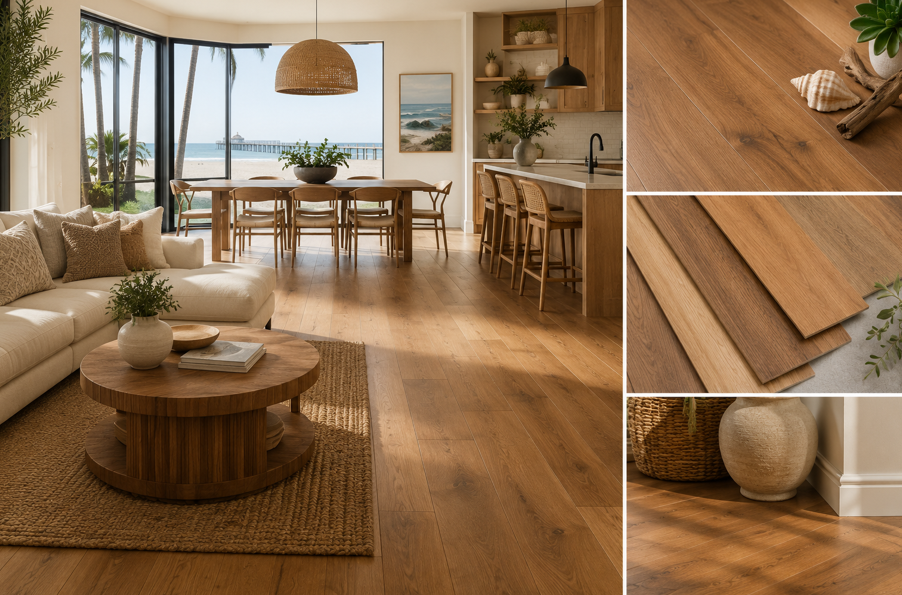
Warm wood tones are reshaping interiors in 2026. After years of cool grey floors and pale, almost colourless finishes, homeowners are bringing back natural warmth through honeyed oak, soft chestnut, caramel, walnut and medium-brown wood looks. The result feels welcoming rather than heavy, refined rather than rustic, and especially well suited to the bright, relaxed character of Huntington Beach homes.
At Sharon and Sons, we see flooring as more than a surface underfoot. It sets the mood for the entire home, influences how sunlight moves through a room and provides the foundation for cabinetry, furniture, paint and textiles. With more than 40 years of family experience serving Orange County, our team helps homeowners compare materials honestly and choose a floor that suits both their design vision and daily routine.
Warm-toned hardwood and laminate can both achieve the natural, grounded look that is defining 2026. The right choice depends on the character you want, the demands of the room, your maintenance preferences and your budget. This guide explains the trend and how to select a floor that will continue to feel beautiful after the latest design cycle has moved on.
Why Warm Wood Tones Are Defining Flooring in 2026
The return to warmth is part of a broader move towards interiors that feel calm, comfortable and connected to nature. Cool greys can look crisp, but they may also make a room feel flat or chilly when used across large surfaces. Warm wood tones add visual depth and soften clean-lined contemporary spaces without requiring ornate detailing.
The most current floors are not necessarily orange, red or strongly yellow. Many 2026 collections use balanced undertones: natural oak with a gentle golden cast, beige-brown planks with subtle cream variation, or medium chestnut shades that reveal grain without appearing dark. These colours provide warmth while remaining versatile.
Warm floors also support layered interiors. They pair naturally with linen, leather, woven fibres, handmade tile and stone. In a modern home, they prevent minimalist rooms from feeling sterile. In a traditional interior, they highlight craftsmanship without making the space look dated.
Flooring is a long-term investment, so adaptability matters. A balanced warm brown can sit comfortably beside creamy whites today, muted greens later and deeper blues or terracotta in the future.
What Counts as a Warm Wood Tone?
“Warm” describes the undertone rather than simply the depth of the colour. A light floor can be warm, and a dark floor can be cool. When comparing samples, look beyond whether the plank is blonde, medium or deep brown. Notice the colour beneath the surface.
Common warm wood families include:
Honey and natural oak: Light to medium shades with gentle gold or amber notes.
Caramel and toasted beige: Soft brown colours that create warmth without strong yellow or red.
Chestnut: Medium brown with rich variation and an established character.
Walnut-inspired tones: Deeper browns with subtle chocolate or auburn movement.
Warm greige: Beige and softened grey, with enough brown to avoid a cold appearance.
The most versatile choices usually have moderate variation. A completely uniform floor may look manufactured, while extreme contrast can dominate the room. Gentle shifts from plank to plank create natural movement and can help disguise everyday dust or small marks.
Why Warm Floors Suit Coastal Orange County Homes
Coastal design does not have to mean whitewashed boards or obvious nautical styling. In Orange County, many homeowners prefer a polished interpretation: airy rooms, natural materials, clean architecture and a comfortable indoor-outdoor connection. Warm flooring supports that look by bringing an organic element into sun-filled interiors.
In Huntington Beach, strong California light can change how a sample appears throughout the day. A floor that looks neutral under showroom lighting may reveal more gold in afternoon sun, while a dark brown may seem lighter beside large windows and pale walls. Viewing samples in the actual room is essential.
Warm wood colours also complement creamy plaster walls, limestone, travertine, handmade ceramic tile, woven shades and natural fabrics. In contemporary spaces, a warm floor can balance black-framed windows, slab cabinetry and streamlined furniture.
Practical needs matter too. Beach-area households may bring in sand and grit, while active families need surfaces that handle pets, children and frequent entertaining. Colour is only part of the decision; construction, finish, wear layer and installation method must suit the way the home is used.
Five Warm Wood Colour Families to Consider
1. Natural White Oak
Natural white oak is one of the easiest warm tones to live with. It is lighter than traditional brown flooring but has enough beige and golden character to keep a room inviting. Its grain can appear clean and quiet in a select grade or more expressive in a character grade.
This colour works well in open-plan homes because it reflects light and creates continuity. It pairs with warm white walls, taupe upholstery, cream stone and both pale and dark cabinetry. A low-sheen finish keeps the look modern.
2. Honeyed Blonde
Honeyed blonde floors are brighter and more golden than natural oak. They can make shaded rooms feel more cheerful and add a sunlit quality to interiors. The key is choosing a sophisticated finish rather than a strongly yellow or glossy one.
A matte or satin honey tone feels current with simple furnishings and natural textures. It offers warmth without the visual weight of medium-brown flooring.
3. Caramel and Toasted Oak
Caramel sits between blonde and brown. It has more depth than a pale floor while remaining easy to coordinate. Toasted oak tones can ground large rooms and define an open living area without closing it in.
These colours are practical in busy homes because grain and tonal movement may conceal small particles between routine cleanings. They work with natural wood, cream, muted green and charcoal cabinetry.
4. Chestnut and Medium Brown
Medium brown is returning in a more natural, less glossy form. Chestnut shades feel established and elegant, yet they can still look contemporary when planks are wider and the finish is low sheen.
This family creates attractive contrast against light walls and upholstery and can make an expansive room feel more intimate. Check whether a sample leans orange, red, neutral or chocolate before coordinating other materials.
5. Walnut-Inspired Brown or Warm Greige
Walnut tones bring richness and are especially effective in formal living rooms, bedrooms and offices. Darker floors tend to show pale dust, pet hair and surface marks more readily, so cleaning expectations should be considered.
Warm greige offers a softer alternative for homeowners moving away from cool grey but not ready for pronounced golden brown. Look for beige-brown undertones rather than silver or blue.
Hardwood or Laminate: Which Creates the Right Warm Look?
Both hardwood and laminate can express the warm-wood trend, but they offer different experiences.
Real hardwood has natural depth, individual grain and variation that cannot be perfectly repeated. Each board contributes to the finished character of the room. Depending on the product, hardwood may also be refinished in the future, extending its service life and allowing its appearance to evolve. For homeowners who value authenticity, long-term beauty and the feel of a natural material, Hardwood is often the preferred choice.
Engineered hardwood can be particularly useful in Southern California homes because its layered construction generally provides greater dimensional stability than traditional solid wood. Product specifications vary, so the wear layer, installation requirements and manufacturer guidance should always be reviewed.
Laminate uses a high-resolution decorative layer to recreate wood, protected by a durable wear surface. Modern products can reproduce grain, knots, colour shifts and plank texture with impressive realism. Laminate may suit active households seeking scratch resistance, straightforward maintenance and a more accessible price point.
The trade-off is that laminate does not develop the same patina as genuine wood and generally cannot be sanded and refinished in the way some hardwood floors can. Water resistance also differs by product. “Water-resistant” and “waterproof” should not be treated as interchangeable without checking the warranty and installation instructions.
The better choice is not simply the more expensive one. It is the material whose appearance, construction and care requirements fit the household.
How to Match the Undertone to Your Home
A warm floor should relate to the permanent features in the room without matching them exactly. Start with elements that are difficult or costly to change: stone, tile, fireplace surrounds, built-in cabinetry and countertops.
Materials containing cream, gold, beige or warm veining usually sit comfortably with natural oak, caramel or chestnut. If the room includes cooler quartz, blue-grey tile or crisp white cabinetry, a balanced warm greige may create a smoother connection.
Place several sample boards together because pattern repetition and colour variation become clearer across a larger area. Set them beside cabinetry and paint, then look at them in morning, midday and evening light.
Artificial lighting matters as well. Warmer bulbs can intensify gold and red undertones, while cooler bulbs may mute them or make surrounding finishes appear disconnected. The aim is to understand how the palette behaves in real conditions.
Plank Width, Grain and Finish Matter as Much as Colour
Colour attracts attention first, but other details determine whether the floor feels modern, traditional or rustic.
Wider planks make grain easier to appreciate and reduce the number of seams across the room. They often support a calm, contemporary look, although an extremely wide plank may overwhelm a small space.
Longer boards create smoother visual flow. In laminate, longer formats can help the floor resemble natural timber, especially when pattern repetition is limited.
Clean grain suits minimalist and transitional homes. More knots, mineral streaks and colour changes create a casual, organic appearance. The right level of character depends on the architecture and the homeowner’s preference.
Matte and low-sheen finishes allow the grain and colour to take priority and tend to show fewer minor scuffs than high-gloss surfaces. Light brushing or texture can add depth and disguise everyday wear. Heavy artificial distressing should be chosen carefully unless a strongly rustic style is intentional.
Coordinating Warm Floors with Cabinets and Furnishings
Warm wood flooring does not require every other wood in the room to match. A carefully mixed palette often looks more natural.
When combining woods, identify a shared undertone. A caramel floor can work with walnut furniture because both are warm, even though one is lighter. Natural oak can pair with painted cabinetry and a darker wood island, provided the grains do not compete.
Useful combinations include:
Natural oak flooring with creamy white or muted sage cabinetry
Toasted brown flooring with warm white cabinets and brushed brass
Medium chestnut flooring with soft taupe cabinets and pale quartzite
Warm greige flooring with rift-cut oak cabinets and matte black accents
Walnut-inspired flooring with light slab cabinets and understated stone
Warm whites, oatmeal, sand, mushroom and light taupe are reliable wall colours. Muted greens, dusty blues and clay tones add colour while preserving a grounded feeling. Brass and bronze reinforce warmth, while black gives definition.
Choosing for Daily Life, Not Only Appearance
For living rooms and open-plan areas, a warm midtone can anchor pale furniture and create continuity between connected spaces. In kitchens, compare flooring directly with cabinet doors and countertop samples; two attractive wood tones may clash when their undertones are close but not aligned.
Bedrooms can carry honey, caramel or walnut-inspired colours particularly well because those shades create a restful foundation. In entries and busy family areas, midtones with natural variation are often more forgiving than very pale or very dark floors.
Performance should be evaluated with the same care as colour. Consider scratch and stain resistance, moisture exposure, cleaning requirements and the manufacturer’s warranty. Use suitable mats near exterior doors to reduce tracked-in grit, and follow product-specific maintenance guidance rather than assuming every wood-look floor is cared for in the same way.
Common Mistakes to Avoid
The first mistake is selecting a tone because it looks attractive online. Screen settings, photography and surrounding décor can alter the apparent colour. Physical samples viewed at home are essential.
The second is focusing only on trend labels. “Warm,” “natural” and “European oak” can describe very different products. Evaluate the actual undertone, construction, finish and warranty.
The third is matching every wood exactly. A room filled with one identical finish can feel staged. Aim for coordination through undertone and contrast.
The fourth is ignoring maintenance. A dark walnut look may be beautiful, but it may not suit a household that wants dust and pet hair to remain less noticeable. A highly varied floor may hide wear but compete with patterned stone or dramatic cabinetry.
The fifth is making the flooring decision last. Because the floor covers such a large area, it should be considered early alongside cabinets, counters and major furnishings.
Choosing a Warm Floor That Will Last Beyond 2026
Trends are most useful when they help homeowners recognise what they genuinely enjoy. Warm wood tones have current momentum, but their deeper appeal is timeless: they make rooms feel comfortable, natural and connected.
Narrow the options by lifestyle first. Decide how much natural variation you prefer, how much maintenance feels realistic, whether future refinishing matters and which rooms require enhanced moisture or scratch performance. Then compare colour families within the materials that meet those needs.
Take time with samples. Move them around the room, place them beside fixed finishes and observe them over several days. A floor is seen in changing light, not under a single showroom lamp.
For homeowners planning a flooring update in Huntington Beach, Sharon and Sons offers a broad selection of hardwood and laminate options along with personalised guidance from a family team that has served Orange County for more than four decades. To compare warm tones, discuss installation and find the right balance of beauty, performance and budget, contact us or visit the Santa Ana showroom.


